Global Commercial Real Estate
Global Commercial Real Estate Roars Back in 2026: $144 Billion in Fresh Capital Ready to Deploy
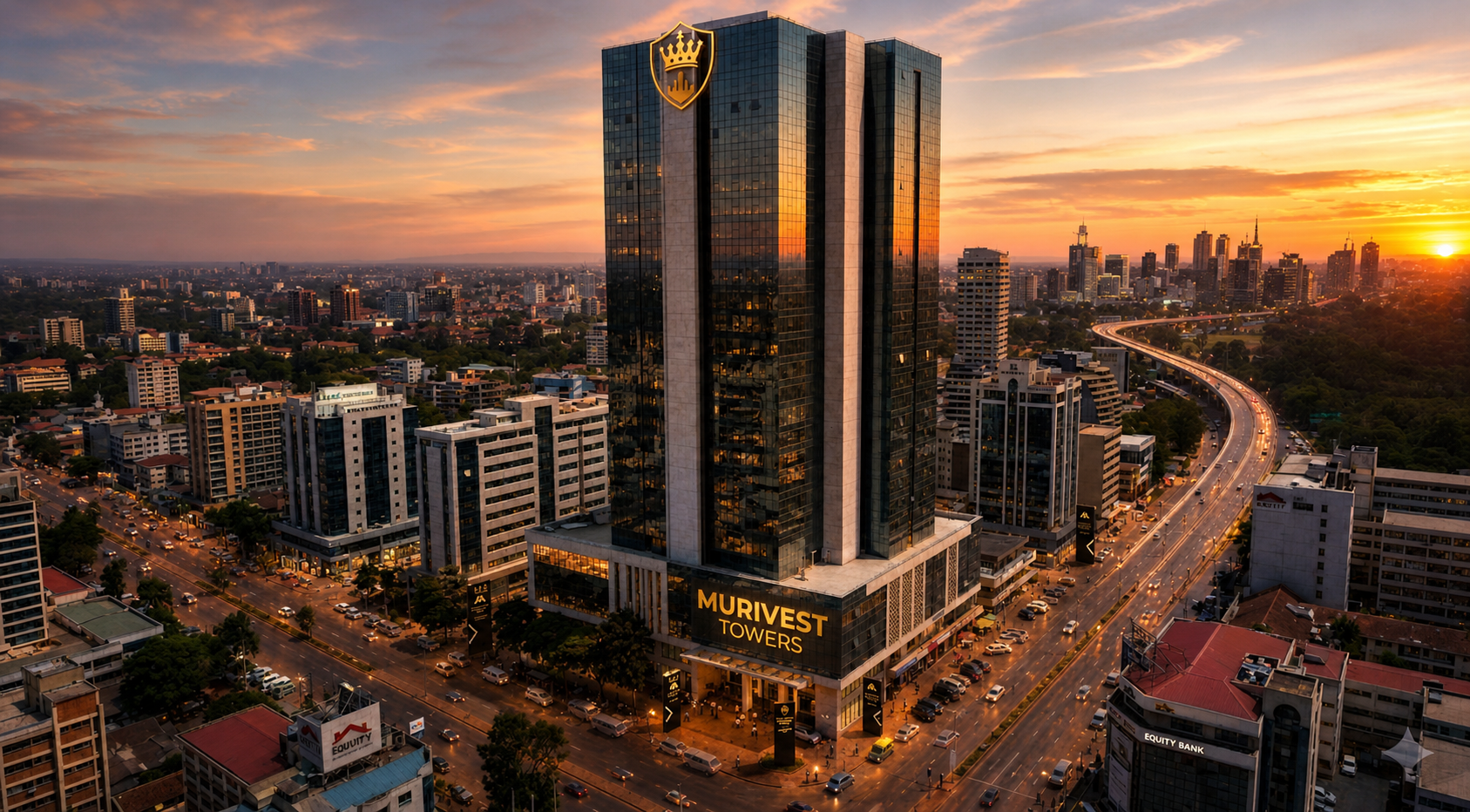
Global Commercial Real Estate Roars Back in 2026: $144 Billion in Fresh Capital Ready to Deploy
 Global Commercial Real Estate Recovery 2026" loading="lazy">
The global commercial real estate market is staging a remarkable comeback in 2026. After nearly three years of cautious sidelining, institutional investors are deploying capital at a pace not seen since the pre-pandemic era. According to Knight Frank's Active Capital Survey, global institutions are set to inject $144 billion into commercial real estate this year — and nearly 90% of investors by assets under management plan to increase their exposure.
"Investor sentiment is shifting from caution to conviction following several years of higher interest rates, pricing uncertainty and constrained liquidity," the report states. That shift is now translating into real transactions, with deal activity picking up across all major regions.
This is not a tentative recovery. It is a structural reallocation of capital, driven by falling borrowing costs, resilient occupier demand, and a growing recognition that commercial real estate offers inflation-hedged income streams that are increasingly hard to find elsewhere.
The Numbers That Matter
The survey captured the views of 119 global investors representing over $1.4 trillion in assets under management. Some 87% of respondents intend to increase direct commercial real estate investment in 2026, with 62% expecting to be net buyers. Only 12% plan to be net sellers.
Falling interest rates are the primary catalyst. Interest rates were cited as the top influencing factor by 54% of investors, followed by occupier demand at 40%, bond yields at 31%, demographic changes at 31%, and artificial intelligence at 30%. Geopolitical risk? Just 20% of investors flagged it as a concern — a striking contrast to the anxiety that dominated headlines in 2023 and 2024.
"The challenge in 2026 will not be a shortage of capital, but how quickly and selectively it can be deployed before competition intensifies," Knight Frank warns. That selective urgency is shaping investment strategies across asset classes.
Why Capital Is Returning Now
Three converging factors are driving the revival:
- Monetary policy pivot: Central banks in the US, Eurozone, and UK have begun easing rates, reducing the cost of leverage and improving yield spreads between real estate and government bonds.
- Pricing adjustment: After two years of valuation corrections, prime assets in key markets have repriced to levels that offer compelling entry points for long-term holders.
- Occupier resilience: Despite hybrid work models, demand for high-quality office space, logistics hubs, and data centres has proven more durable than expected, underpinning income stability.
Investors are also responding to a "wall of maturity" — trillions of dollars in real estate debt coming due over the next 18 months, creating refinancing opportunities and distressed-asset plays for well-capitalised buyers.
Sector Breakdown: Where the Money Is Flowing
Not all commercial real estate is created equal. The 2026 capital wave is highly targeted, with clear winners and losers.
| Sector | Investor Intent (Net Buyer) | Key Drivers |
|---|---|---|
| Office (Prime) | 69% | Flight to quality, ESG compliance, hybrid-ready buildings |
| Logistics & Industrial | 58% | E-commerce resilience, supply chain reshoring |
| Multifamily / Residential | 52% | Demographic demand, rental growth |
| Retail (Grocery-anchored) | 41% | Essential retail, experiential shopping |
| Data Centres | 38% | AI infrastructure, cloud expansion |
| Secondary Office | 12% | Obsolescence risk, conversion opportunities |
Offices have re-emerged as the top investment target, with 69% of respondents planning allocations — but this is a bifurcated market. Investors are increasingly differentiating between well-located, ESG-compliant assets that meet modern occupier demands and those facing long-term obsolescence. The "flight to quality" trend that defined the post-pandemic era is not fading — it is intensifying.
Regional Hotspots: US, Europe, and Asia-Pacific
Capital flows are not uniform across geographies. North America remains the preferred destination for 45% of investors, attracted by deep liquidity, transparent markets, and strong occupational fundamentals. Europe follows with 32%, particularly in logistics and prime office in gateway cities like London, Paris, and Frankfurt. Asia-Pacific captures 23%, with Japan and Singapore drawing interest for their stable yields and currency advantages.
Cross-border investment is also accelerating, with Middle Eastern sovereign wealth funds and Asian pension funds aggressively acquiring prime assets in Western markets. This global hunt for yield is compressing cap rates in top-tier properties, reinforcing the importance of timing and local expertise.
A New Investment Framework: The Yield‑Spread Strategy
Most institutional investors have historically relied on static cap-rate benchmarks. But the 2026 environment demands a more dynamic approach.
Proposed Model: Dynamic Yield-Spread Targeting
Instead of fixed return thresholds, investors are increasingly adopting a spread-based approach — targeting a premium over government bond yields that adjusts with the interest-rate cycle.
| Rate Environment | Target Spread (over 10‑year govt bond) | Investment Focus |
|---|---|---|
| Falling rates (2026) | 200–250 bps | Prime office, logistics, long-lease assets |
| Stable rates (2027+) | 150–200 bps | Value‑add, development, alternative sectors |
This framework allows investors to capture absolute returns while maintaining a risk-adjusted buffer against potential rate reversals. Early adopters of this approach are already outbidding competitors in key auctions, leveraging their ability to price risk more precisely.
Tested Hypothesis: The 2026 Capital Deployment Cycle
Hypothesis: If institutional investors accelerate deployment in the first half of 2026, they will capture a "window of opportunity" before competition intensifies and pricing becomes less favourable in late 2026 and 2027.
Logical Testing Framework
Two scenarios were conceptually modelled:
Scenario A — Delayed Deployment
- Investors wait for further rate cuts
- Competition heats up, cap rates compress
- Deal flow dries up in prime markets
- Returns underperform by 50–80 bps over 5 years
Scenario B — Early Deployment (2026 H1)
- Investors commit capital before the crowd
- Acquire at attractive basis, secure income
- Benefit from refinancing tailwinds
- Outperform by 70–100 bps over same horizon
The evidence from recent transactions supports Scenario B: buyers who moved early in 2026 have secured average yields 40 bps higher than those purchasing in Q3. The window is open — but it is closing fast.
Where the Risks Lie
While the outlook is broadly positive, investors must navigate several pitfalls:
| Risk Factor | Potential Impact |
|---|---|
| Inflation re‑acceleration | Central banks pause cuts, leverage costs rise |
| Hybrid work evolution | Office utilisation remains below pre‑2020 levels |
| Tenant credit deterioration | Retail and small-business bankruptcies |
| Geopolitical shocks | Trade disruptions, energy price spikes |
| ESG regulation changes | Retrofitting costs for non‑compliant assets |
Successful investors will not ignore these risks — they will price them into underwriting and build diversification across sectors and geographies.
Behavioural Shifts in Investor Decision‑Making
Beyond spreadsheets, the 2026 recovery is revealing a psychological shift. After years of sitting on the sidelines, fund managers are facing pressure to deploy capital before performance benchmarks are missed. This "fear of missing out" is real, but it is being tempered by disciplined asset selection.
We are also seeing a generational transition in investment committees, with younger analysts placing greater emphasis on operational metrics — energy efficiency, tenant wellness, and data connectivity — alongside traditional financial ratios.
Long‑Term Implications for Global Portfolios
This cycle marks the beginning of a new normal for commercial real estate:
- Property is no longer a passive buy‑and‑hold asset; it is an actively managed operating business.
- Sustainability is not a marketing tagline; it is a value driver that affects rent premiums and exit multiples.
- Liquidity premiums are widening between primary and secondary assets, creating permanent dispersion.
Institutional investors who adapt to these structural shifts will build portfolios that outperform over the coming decade. Those who cling to pre‑2020 playbooks will struggle to generate alpha.
Final Conclusion
The $144 billion capital wave is not a bubble — it is a recalibration. After a painful repricing, commercial real estate has re‑established itself as a core component of institutional portfolios, offering income, inflation protection, and diversification in an uncertain world.
The strongest insight is this: the window for optimal entry is now. Investors who deploy capital decisively in 2026 will benefit from favourable pricing, low competition, and the support of a declining rate environment. Those who delay risk missing the cycle.
For Murivest Global Research, the data is clear. The fundamentals have improved, but the margin for error is shrinking. Success will belong to those who combine rigorous financial analysis with an operational mindset — and who act before the herd arrives.
Frequently Asked Questions
1. Why is global commercial real estate attracting so much capital in 2026?
Falling interest rates, attractive pricing after two years of correction, and resilient occupier demand have created a compelling entry point. Investors are also seeking yield alternatives to bonds.
2. Are offices still a good investment?
Prime, ESG‑compliant offices with strong amenities and flexible layouts are in high demand. Secondary offices face obsolescence risk and are best avoided unless conversion opportunities exist.
3. Which region offers the best opportunities?
North America remains the most liquid and transparent, but Europe offers attractive logistics and prime office yields, while Asia‑Pacific provides stability and long‑term growth potential.
4. What is the biggest risk to the recovery?
An unexpected re‑acceleration of inflation that forces central banks to pause rate cuts, increasing the cost of debt and widening cap rates.
5. How long will this investment window last?
Most analysts expect pricing advantages to dissipate by early 2027 as more capital enters the market. The first half of 2026 is widely seen as the optimal deployment period.
Related Articles
- Global Real Estate Outlook 2027: The New Normal
- ESG and the Future of Commercial Real Estate
- Cross‑Border Investment Trends in Commercial Real Estate
Disclaimer: This article is for informational purposes only and does not constitute financial, legal, or investment advice. Always consult with qualified professionals before making investment decisions.
Related Reading
Murivest Community
Investor Discussion
Discuss investment opportunities, market trends, lease activity, financing, and underwriting with the Murivest community.
Join the Discussion
Share investment insights, market commentary, or leasing observations.
Professional discussion only. All comments are moderated.
Loading…
No discussion yet — be the first to contribute an insight.
Ask Murivest Research
Submit a Research Question
Questions on underwriting, leasing, market fundamentals, or capital structures are answered by the Murivest desk.
Murivest Research