Investment
UAE Industrial and Logistics Real Estate: Demand Analysis and Market Outlook for 2026
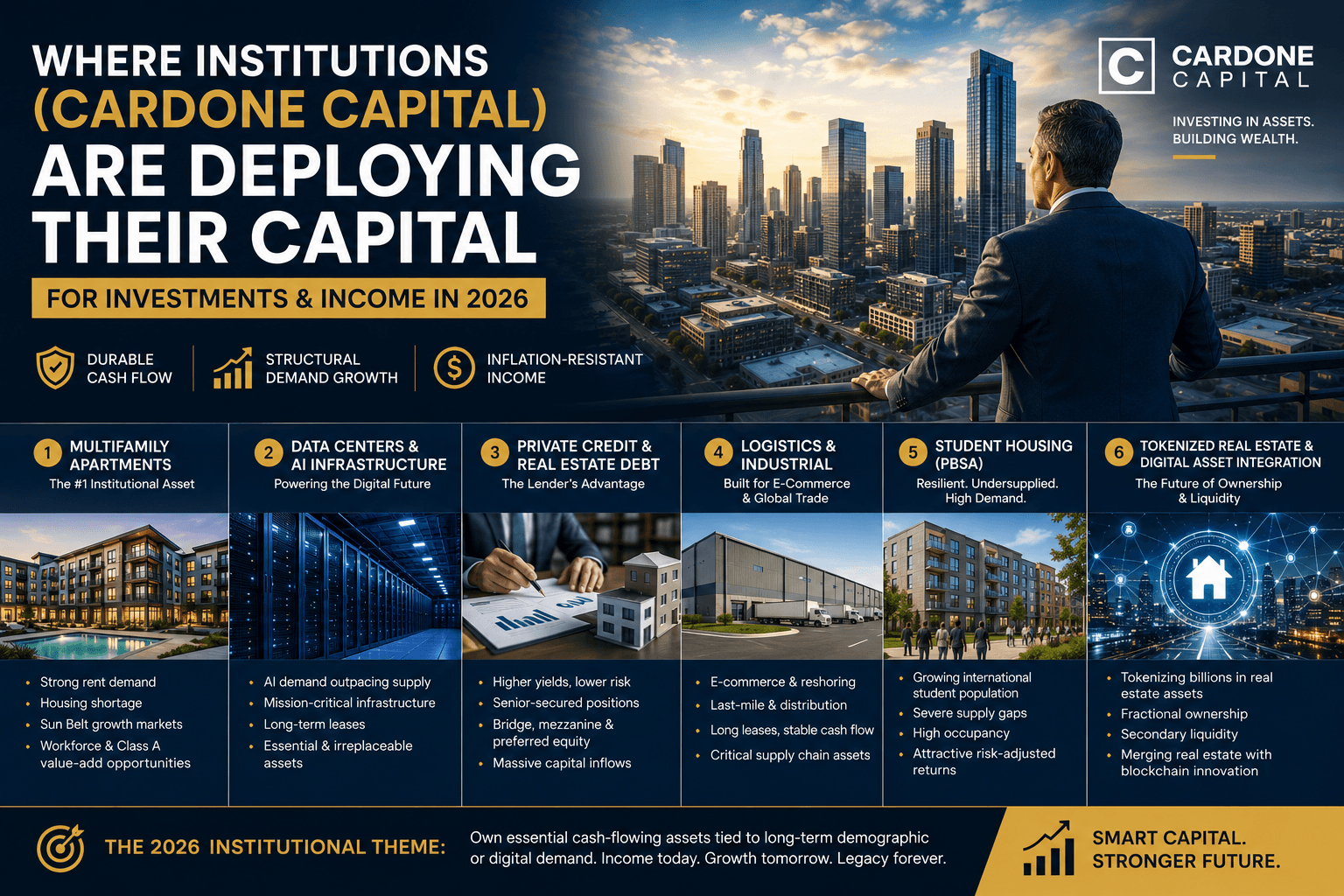
UAE Industrial and Logistics Real Estate: Demand Analysis and Market Outlook for 2026
A research note for institutional investors evaluating the UAE industrial and logistics real estate market in 2026. This analysis covers occupancy rates, rent trajectories, new supply pipelines, and the strategic implications for capital deployment across Dubai and Abu Dhabi industrial zones.
Executive Summary
The UAE industrial and logistics real estate market is experiencing a bifurcation in 2026. Dubai's logistics zone demands continue to grow driven by e-commerce fulfilment and regional distribution, while Abu Dhabi's industrial corridor benefits from government-backed manufacturing incentives. Occupancy rates across the two emirates show divergent trends: Dubai has stabilised at 93.5% for logistics facilities, while Abu Dhabi has tightened to 88.2% following the completion of major new supply in H1 2026.
Rent growth is moderating in Dubai (2-3% annually) but accelerating in Abu Dhabi (5-7% annually) as supply chains consolidate around Khalifa Port. For institutional investors, the key decision point is geographic allocation: Dubai offers scale and liquidity, while Abu Dhabi offers yield pick-up and government backing.
Market Overview: Dubai vs. Abu Dhabi
The UAE's two largest industrial markets are diverging in terms of supply-demand balance and rental growth:
| Metric | Dubai | Abu Dhabi | Difference |
|---|---|---|---|
| Industrial Occupancy (Q2 2026) | 93.5% | 88.2% | -5.3 pts |
| Avg. Rent Growth 2026 YTD | +2.5% | +5.8% | +3.3 pts |
| New Supply Delivered (sqm) | 780,000 | 1,050,000 | +270,000 |
| Pipeline 2026-2027 (sqm) | 520,000 | 880,000 | +360,000 |
| Gross Yield (Prime Logistics) | 6.2% | 7.4% | +120 bps |
Source: CBRE UAE Industrial Market Report Q2 2026, JLL MENA Industrial Real Estate Outlook.
Demand Segments: Who's Leasing Industrial Space?
Leasing activity in 2026 has been driven by three primary tenant segments:
E-Commerce Fulfilment
E-commerce operators account for 35% of new industrial leasing volume in Dubai and 22% in Abu Dhabi. Average space requirement: 8,000-15,000 sqm. These tenants typically sign 5-7 year leases with quarterly rent reviews.
Regional Distribution Centres
Multinational corporations establishing Middle East distribution hubs account for 28% of leasing. Average requirement: 15,000-45,000 sqm. These tenants seek 7-10 year leases with step-up escalations and fit-out allowances of £150-250/sqm.
Third-Party Logistics (3PL)
3PL providers account for 19% of leasing, typically taking speculative space to serve multiple clients. Average requirement: 5,000-12,000 sqm, 3-5 year leases with break clauses.
Rent Trajectory Analysis
Prime logistics rents have followed different trajectories in the two emirates:
| Zone | 2024 Avg. Rent | 2025 Avg. Rent | 2026 Avg. Rent | 3Y CAGR |
|---|---|---|---|---|
| Dubai Logistics Zone | $9.80/sqm | $10.15/sqm | $10.45/sqm | +3.3% |
| Abu Dhabi KIZ | $8.20/sqm | $8.65/sqm | $8.85/sqm | +3.9% |
| Dubai South | $7.40/sqm | $7.65/sqm | $7.90/sqm | +3.4% |
| Abu Dhabi MBZ City | $6.80/sqm | $7.10/sqm | $7.35/sqm | +4.1% |
Rent growth in Abu Dhabi is outpacing Dubai, driven by the supply-demand imbalance as new supply outpaces take-up. This dynamic is creating a window where investors can achieve both higher yields and rental growth in Abu Dhabi's industrial market.
Market observation: The Abu Dhabi logistics market is in a 12-18 month window where yields are attractive and rents are rising. This is unlikely to persist as supply catches up with demand in 2027.
New Supply Pipeline and Risk Assessment
The UAE industrial supply pipeline totals 1.4 million sqm for delivery in 2026-2027. Key projects include:
- Dubai Industrial City Phase 4: 420,000 sqm, delivering Q3 2026, 75% pre-let
- Abu Dhabi Logistics Hub: 380,000 sqm, delivering Q4 2026, 45% pre-let
- Al Maktoum International Logistics Zone: 350,000 sqm, delivering Q1 2027, 30% pre-let
- Dubai South Logistics Park: 250,000 sqm, delivering Q2 2027, 60% pre-let
Construction cost inflation remains a concern, with steel and concrete prices 12% above Q4 2025 levels. Projects with significant unlet exposure face completion risk, particularly those in Abu Dhabi where pre-letting rates are lower.
Investment Considerations for Institutional Capital
Institutional investors allocating to UAE industrial real estate should consider three critical factors:
Fit-Out Exposure and Tenant Improvement Costs
Average fit-out costs for modern logistics facilities range from £150-250/sqm. Investors can mitigate this exposure through:
- Gross lease structures where tenants bear fit-out costs
- Rent abatement periods in lieu of landlord-funded improvements
- Shell-and-core delivery with tenant-fit specifications
Lease Structure and Escalation Terms
UAE industrial leases typically include:
- Annual or quarterly rent reviews linked to CPI or fixed escalations of 3-5%
- Break clauses exercisable by tenants at 3-5 year intervals
- Guaranteed renewals at market rent (subject to tenant election)
Investors should stress-test cash flows under a scenario of 15% rent decline and 20% fit-out cost overrun.
Exit Liquidity and Market Depth
Dubai's industrial market has greater liquidity and a broader investor pool. Abu Dhabi's market is more concentrated, with fewer potential buyers at exit. Investors holding Abu Dhabi assets should plan for a 12-18 month sale process versus 6-9 months in Dubai.
Frequently Asked Questions
Which emirate offers better risk-adjusted returns for industrial real estate?
Abu Dhabi currently offers higher yields (7.4% vs 6.2%) and faster rent growth (5.8% vs 2.5%), making it attractive for core-plus investors. Dubai offers better liquidity and market depth for core investors seeking long-term holds.
What is the typical lease term for UAE industrial properties?
Prime logistics facilities command 5-10 year leases with 3-5% annual escalations. Fit-out allowances average £150-250/sqm, typically structured as rent abatement during construction and 3-6 months of free rent.
How does the UAE Golden Visa impact industrial real estate investment?
The Golden Visa program supports long-term investment by enabling foreign investors to obtain 10-year residency, reducing currency hedging needs and increasing commitment to local assets. This is particularly relevant for logistics operators establishing regional headquarters.
Methodology and Limitations
This analysis is based on Q1-Q2 2026 data from CBRE UAE, JLL MENA, and the Dubai and Abu Dhabi Department of Economic Development. Rent data reflects prime logistics facilities in established zones. New supply data is based on developer announcements and may change. Past performance is not indicative of future results.
Sources
- CBRE UAE: Industrial & Logistics Market Report Q2 2026
- JLL MENA: UAE Industrial Real Estate Outlook 2026
- Dubai Department of Economy and Tourism
- Abu Dhabi Department of Economic Empowerment
Disclaimer: This article provides general research and educational information only and does not constitute investment, legal, tax, or financial advice. Murivest Group Ltd is an independent real estate advisory firm. We do not act as a licensed investment advisor and do not offer regulated financial products or collective investment schemes. We do not pool capital from multiple investors. All advisory engagements are mandate-based, subject to formal documentation, comprehensive KYC/AML verification, and explicit scope definition. Past outcomes do not guarantee future results. All investments carry risk, including potential capital loss.
Filed under
Related Reading
Investment
Diani and Watamu Land have appreciated by 400% since 2020
9 min read
Investment
UK Office Space Investment Outlook 2026: Where Capital Can Still Find Income as Prices Reset
17 min read
Investment
How to Buy Commercial Property in the UK: A Seven-Gate Due-Diligence Framework for Overseas Investors
18 min read
Murivest Community
Investor Discussion
Discuss investment opportunities, market trends, lease activity, financing, and underwriting with the Murivest community.
Join the Discussion
Share investment insights, market commentary, or leasing observations.
Professional discussion only. All comments are moderated.
Loading…
No discussion yet — be the first to contribute an insight.
Ask Murivest Research
Submit a Research Question
Questions on underwriting, leasing, market fundamentals, or capital structures are answered by the Murivest desk.
Murivest Research