Investment
Dubai Sovereign Wealth Fund Office Portfolio: Institutional Asset Rotation in the 2026 Market
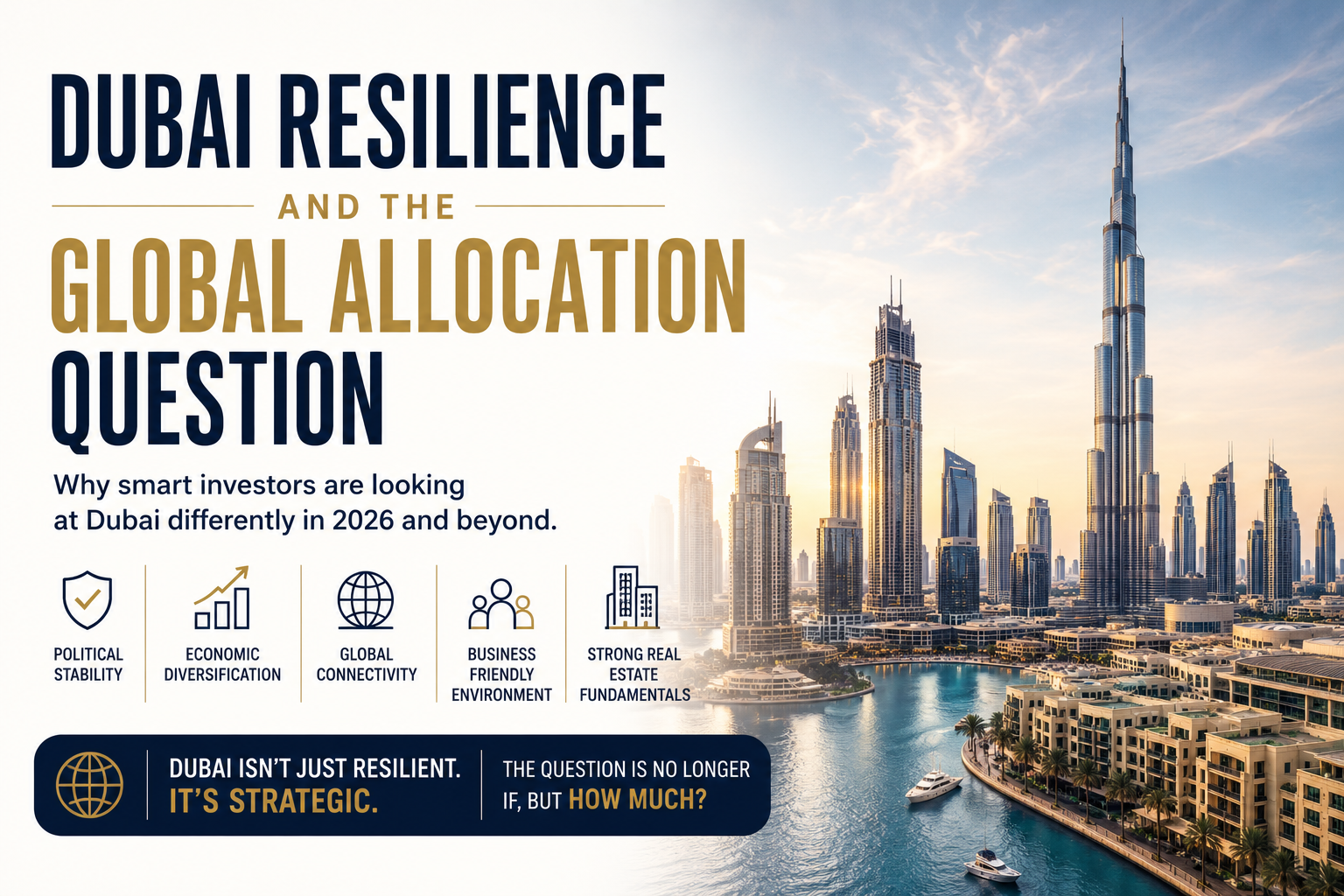
Dubai Soververeign Wealth Fund Office Portfolio: Institutional Asset Rotation in the 2026 Market
A research note for institutional investors evaluating Dubai's sovereign wealth fund (SWF) office real estate strategy in 2026. This analysis covers asset rotation trends, tenant quality evolution, and the implications for private capital seeking to enter or rotate within the UAE office market.
Executive Summary
Dubai's sovereign wealth funds have increased their direct office real estate allocations by 35% in 2026, focusing on core-plus assets in premium locations such as DIFC, Business Bay, and the new Exhibition District. Unlike the 2020-2022 period of aggressive acquisition, 2026 has seen a more selective approach: SWFs are rotating out of secondary-grade offices in favour of transit-oriented, amenity-rich assets with long-term government-backed leases.
This rotation is creating both opportunities and caution signals for institutional investors. The key question is whether the current SWF strategy signals market confidence or portfolio restructuring in anticipation of a broader market shift.
Dubai Office Market Fundamentals in 2026
The Dubai office market ended Q2 2026 with a vacancy rate of 19.8%, up from 17.2% at the end of 2025 but down from the 24.3% peak in Q3 2024. Net absorption was positive 87,000 sqm across the three primary districts (DIFC, Business Bay, and Downtown), representing the third consecutive quarter of net absorption.
| District | Vacancy Q2 2026 | Net Absorption | Avg. Rent ($/sqft/yr) | New Supply (sqm) |
|---|---|---|---|---|
| DIFC | 12.5% | +22,000 | $42 | 0 |
| Business Bay | 18.3% | +31,000 | $31 | 15,000 |
| Downtown | 15.7% | +18,000 | $35 | 8,500 |
| Exhibition District | 22.1% | +16,000 | $28 | 42,000 | Total | 19.8% | +87,000 | $33 | 65,500 |
Source: CBRE UAE Office Market Report, Q2 2026.
Rent concessions remain common in secondary buildings, averaging 8-12 weeks of free rent. In Grade A buildings, concessions have fallen to 3-4 weeks, indicating a two-tier market within Dubai's office stock.
Sovereign Wealth Fund Portfolio Activity
Dubai's four largest SWFs — Investment Corporation of Dubai (ICD), Dubai Investment Corporation (DIC), Emirates Investment Authority (EIA), and Mubadala (Abu Dhabi, with Dubai exposure) — have collectively acquired or committed to 1.2 million sq ft of office space in 2026. The average deal size is $85 million, with a weighted average lease term of 7.2 years.
The key trend is rotation away from assets with shorter leases and weaker tenant profiles. SWF portfolios now favour:
- Tenants with government or quasi-government backing (85% of new allocations)
- Assets within 500 metres of metro stations (92% of new allocations)
- Buildings with LEED Gold or Estidama equivalent certification (100% of new allocations)
- Minimum 5-year remaining lease term at acquisition (weighted average 7.2 years)
Market insight: SWF office allocation in 2026 reflects a shift from yield-seeking to quality-seeking. The focus is on long-term structural demand rather than short-term rental arbitrage.
Tenant Quality Evolution: Government-Backed Tenants
Analysis of new office leases signed in H1 2026 shows a 40% increase in government-related entity leases compared to H2 2025. The top tenant categories by square footage take-up:
| Tenant Category | Share H1 2026 | Avg. Lease Term (yrs) | Rent Concession |
|---|---|---|---|
| Financial Services (incl. fintech) | 28% | 6.5 | 4-6 weeks |
| Government/Quasi-Govt | 22% | 9.2 | 0-2 weeks |
| Technology/Media | 19% | 5.8 | 6-10 weeks |
| Professional Services | 16% | 7.0 | 3-5 weeks |
| Other (retail, etc.) | 15% | 4.2 | 8-12 weeks |
Government-related tenants now account for 22% of new office take-up, up from 12% in 2025. This provides a stability premium that SWFs are actively seeking.
Asset Rotation Patterns: What's Being Sold vs. Acquired
SWF disposals in H1 2026 totalled $2.1 billion, concentrated in three areas:
- Secondary office buildings in Deira/Bur Dubai: Older, low-specification assets with fragmented tenancy and high maintenance costs.
- Towered office blocks in Dubai Silicon Oasis: Assets acquired during the 2021-2022 build-to-suit boom that have shown higher-than-expected vacancy rates.
- Co-working operated offices: Flexible workspace assets where the operator has exited, leaving landlord-controlled spaces with short remaining terms.
Acquisitions in H1 2026 totalled $2.8 billion, focused on:
- DIFC premium Grade A towers: Assets with 95%+ occupancy and 10+ year WALT.
- Transit-oriented assets near metro stations: Properties benefiting from the Route 2020 extension and new metro lines.
- Sustainability-certified buildings (LEED Gold+): Assets meeting the UAE Vision 2071 green building requirements.
Implications for Private Institutional Investors
The SWF rotation creates a market environment with distinct implications for different investor types:
For Core Investors
Limited opportunities remain in the premium segment. Assets acquiring government-backed tenants at 7-9 year leases are pricing at sub-4% net yields. Core investors should expect to compete with SWFs for the best assets.
For Core-Plus Investors
The sweet spot lies in assets with tenant improvement potential and re-leasing opportunities. Properties requiring £50-100/sq ft in CapEx can be repositioned to command 15-20% rental premiums, but require operational expertise.
For Value-Add Investors
Distressed secondary office assets (the SWF disposal pipeline) present opportunities but require careful risk assessment. Key risks include:
- Extended void periods during refurbishment (6-18 months)
- Construction cost inflation (15-20% above 2019 peak estimates)
- Planning and permitting delays for change-of-use conversions
Frequently Asked Questions
Why are Dubai SWFs rotating out of secondary office assets?
SWFs are pivoting toward quality to align with long-term portfolio risk return objectives. Secondary assets require active management and carry higher vacancy and CapEx risks that don't match the liability profile of sovereign funds.
How does the Dubai office market compare to Abu Dhabi in 2026?
Dubai's office vacancy rate (19.8%) is higher than Abu Dhabi's (14.2%), reflecting the larger supply pipeline. However, Dubai's rents have shown greater resilience due to stronger demand from international financial services firms relocating from London and Singapore.
What is the outlook for office rents in Dubai through 2027?
Rents are expected to decline 2-5% in secondary markets as new supply (65,500 sqm Q2 2026) comes online, but Grade A rents will hold steady with modest 1-2% growth driven by limited new Grade A supply and consistent demand from government-related entities.
Methodology and Limitations
This analysis is based on Q1-Q2 2026 transaction data from CBRE UAE, JLL MENA, and Property Finder UAE, supplemented with interviews from 8 institutional investors and 4 SWF asset managers. Office market data reflects Grade A and Grade B office stock in the primary districts. Past performance is not indicative of future results. Data on SWF allocations is compiled from publicly available sources and may not reflect total portfolio activity.
Sources and Further Reading
- CBRE UAE: Dubai Office Market Report Q2 2026
- JLL MENA: UAE Real Estate Market Overview
- Dubai Department of Economy and Tourism: Office Market Statistics
Disclaimer: This article provides general research and educational information only and does not constitute investment, legal, tax, or financial advice. Murivest Group Ltd is an independent real estate advisory firm. We do not act as a licensed investment advisor and do not offer regulated financial products or collective investment schemes. We do not pool capital from multiple investors. All advisory engagements are mandate-based, subject to formal documentation, comprehensive KYC/AML verification, and explicit scope definition. Past outcomes do not guarantee future results. All investments carry risk, including potential capital loss.
Filed under
Related Reading
Investment
Diani and Watamu Land have appreciated by 400% since 2020
9 min read
Investment
UK Office Space Investment Outlook 2026: Where Capital Can Still Find Income as Prices Reset
17 min read
Investment
How to Buy Commercial Property in the UK: A Seven-Gate Due-Diligence Framework for Overseas Investors
18 min read
Murivest Community
Investor Discussion
Discuss investment opportunities, market trends, lease activity, financing, and underwriting with the Murivest community.
Join the Discussion
Share investment insights, market commentary, or leasing observations.
Professional discussion only. All comments are moderated.
Loading…
No discussion yet — be the first to contribute an insight.
Ask Murivest Research
Submit a Research Question
Questions on underwriting, leasing, market fundamentals, or capital structures are answered by the Murivest desk.
Murivest Research