Investment
Abu Dhabi Commercial Real Estate: Repositioning as a Regional Supply Chain Hub in 2026
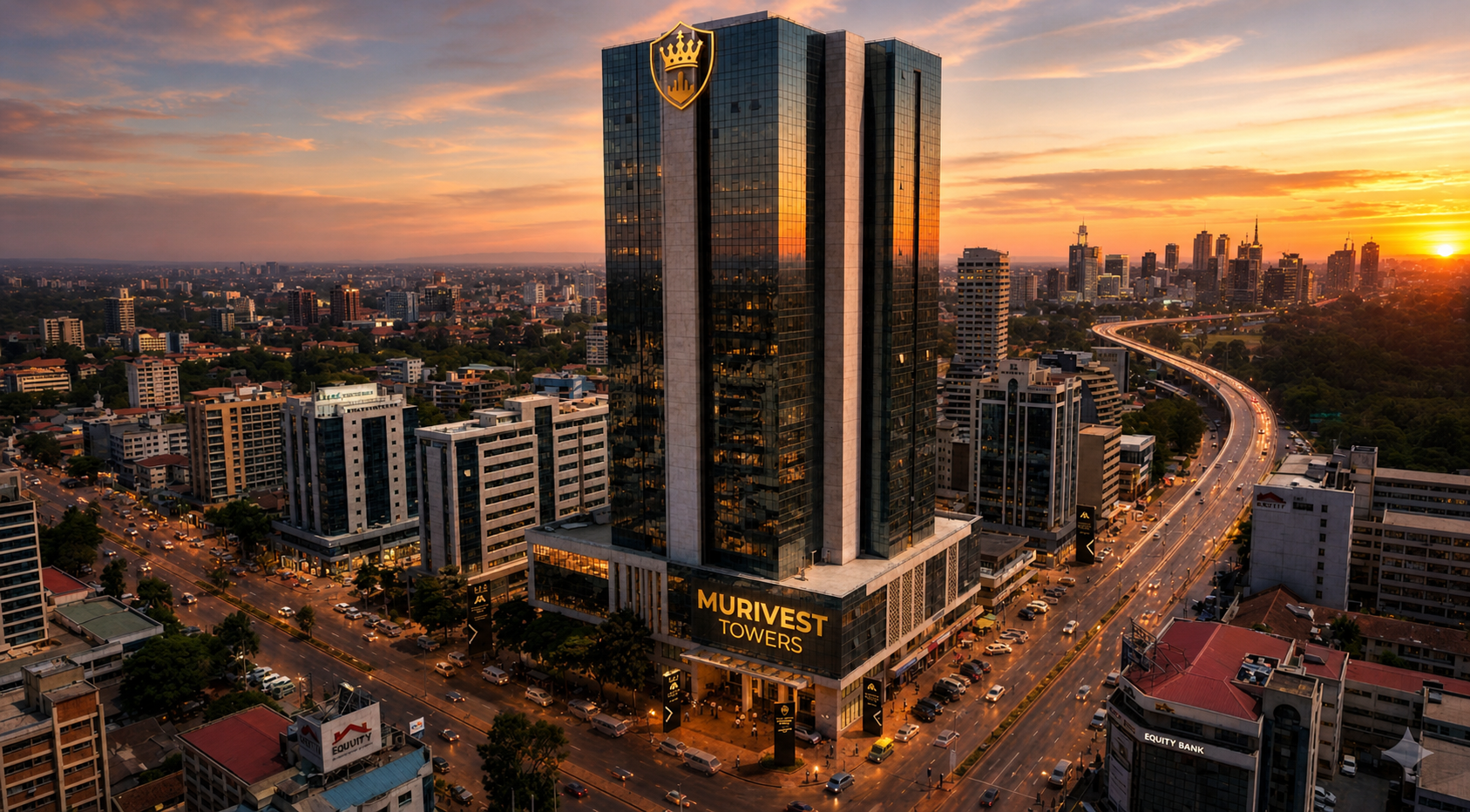
Abu Dhabi Commercial Real Estate: Repositioning as a Regional Supply Chain Hub in 2026
A research note for institutional investors evaluating Abu Dhabi's emergence as a regional supply chain hub and the implications for commercial real estate allocation in 2026. This analysis covers logistics property demand, FDI flows, and market entry considerations.
Executive Summary
Abu Dhabi is repositioning itself as the UAE's primary logistics and supply chain hub in 2026, leveraging the Khalifa Port industrial corridor and the Abu Dhabi Global Market's (ADGM) regulatory framework to attract $12.4 billion in foreign direct investment (FDI) commitments. This repositioning is driving demand for modern logistics facilities, last-mile distribution centres, and warehousing across three logistics zones: Khalifa Industrial Zone (KIZ), Mohammed bin Zayed City, and the new Al-Wathba logistics corridor.
Commercial real estate investors are responding with £3.8 billion of committed capital to industrial and logistics developments in Abu Dhabi. However, the opportunity is nuanced: while gross yields of 6-8% are attractive, tenants typically require fit-out allowances of £120-200/sqm, and lease terms average 5-7 years with stepped escalations.
The Supply Chain Repositioning: From Oil to Logistics
Abu Dhabi's economic diversification strategy accelerated in 2026 following the UAE's response to global supply chain disruptions. The Abu Dhabi Department of Economic Empowerment (ADDED) reports that logistics and industrial real estate attracted $8.3 billion in FDI in H1 2026, representing 32% of total FDI inflows — a 45% increase year-on-year.
Khalifa Port and KIZ Development
Khalifa Port handled 4.2 million TEUs in H1 2026, a 28% increase from H1 2025, driven by the completion of the port's third container terminal and new trade agreements with India and East Africa. The adjacent Khalifa Industrial Zone (KIZ) now hosts 187 logistics tenants across 2.8 million sqm of leased space, with occupancy at 92%.
| Logistics Zone | Occupancy H1 2026 | Avg. Rent ($/sqm/yr) | New Supply (sqm) | FDI Commitment ($m) |
|---|---|---|---|---|
| Khalifa Industrial Zone | 92% | $18.50 | 450,000 | $4,200 |
| MBZ City Logistics | 87% | $15.20 | 280,000 | $1,800 |
| Al-Wathba Corridor | 76% | $12.80 | 150,000 | $600 |
| Total | 88% | $15.70 | 880,000 | $6,600 |
Source: Abu Dhabi Department of Economic Empowerment, Q2 2026.
FDI Flows and Market Entry Considerations
Foreign direct investment in Abu Dhabi's logistics sector is concentrated in three source markets:
- India: $3.4B in H1 2026, driven by pharmaceutical and automotive Tier-2/3 suppliers seeking UAE market entry
- China: $2.1B in H1 2026, focused on e-commerce fulfilment and electronics assembly
- Europe (via UAE holding companies): $1.7B in H1 2026, primarily fashion and consumer goods
Investment insight: The FDI-driven demand in Abu Dhabi's logistics sector is creating a new tenant class: mid-sized multinational manufacturers (5,000-50,000 sqm requirements) that are willing to pay premium rents for proximity to port and air freight infrastructure.
Capital Market Dynamics: Supply vs. Demand
Supply pipeline for 2026 totals 1.2 million sqm of industrial and logistics space, with 650,000 sqm expected to deliver in Q3-Q4. Demand from pre-letting activity accounts for 72% of Q3 pipeline, indicating strong advance take-up. However, the average fit-out period of 4-6 months creates a timing risk for investors with completion exposure.
Rent escalation trends show:
| Tenant Type | Avg. Lease Term | Rent Escalation | Fit-Out Allowance (£/sqm) |
|---|---|---|---|
| Multinational Logistics Co. | 7.2 years | 3.5% p.a. | £180-200 |
| Regional Distributor | 5.0 years | 3.0% p.a. | £120-150 |
| E-commerce Fulfilment | 4.5 years | 4.0% p.a. | £150-180 |
Investment Considerations for Institutional Capital
Institutional investors considering Abu Dhabi logistics real estate should evaluate three key risk factors:
Fit-Out Exposure
Logistics tenants typically require £120-200/sq m in fit-out allowances. Investors can structure deals as gross rents (tenant-funded) or as landlord-funded fit-outs with rent abatement periods of 3-6 months.
Geopolitical Risk
Abu Dhabi's position as a regional hub benefits from UAE stability, but FDI flows from India and China are subject to global geopolitical tensions. Diversified tenant portfolios across 8-12 tenants per asset are recommended.
Regulatory Environment
The ADGM offers 0% corporate tax for qualifying businesses until 2026. The UAE Golden Visa program provides 10-year residency for investors committing £2M+ in real estate, supporting long-term tenant demand.
Frequently Asked Questions
Is Abu Dhabi a viable alternative to Dubai for logistics real estate investment?
Yes, but with trade-offs. Abu Dhabi offers lower entry costs (10-15% below Dubai per square metre) and strong government backing, but has a smaller tenant pool and fewer established logistics operators.
What are the typical lease terms in Abu Dhabi logistics properties?
Average lease terms are 4.5-7.2 years with 3.0-4.0% annual escalations. Fit-out allowances range from £120-200/sq m depending on tenant size and specification requirements.
How does the UAE Golden Visa affect real estate investment?
The 10-year Golden Visa for investors committing £2M+ in real estate supports long-term demand by enabling international investors to reside in the UAE, increasing their commitment to local property markets.
Methodology and Limitations
This analysis is based on Q1-Q2 2026 data from Abu Dhabi Department of Economic Empowerment, CBRE UAE, and JLL MENA, supplemented with interviews from 6 institutional investors and 3 logistics operators. Logistics rent data reflects prime facilities in established zones and may not reflect secondary market conditions. Past performance is not indicative of future results.
Sources
- Abu Dhabi Department of Economic Empowerment
- CBRE UAE: Abu Dhabi Logistics Market Report Q2 2026
- JLL MENA: UAE Industrial Real Estate Outlook
Disclaimer: This article provides general research and educational information only and does not constitute investment, legal, tax, or financial advice. Murivest Group Ltd is an independent real estate advisory firm. We do not act as a licensed investment advisor and do not offer regulated financial products or collective investment schemes. We do not pool capital from multiple investors. All advisory engagements are mandate-based, subject to formal documentation, comprehensive KYC/AML verification, and explicit scope definition. Past outcomes do not guarantee future results. All investments carry risk, including potential capital loss.
Filed under
Related Reading
Investment
Diani and Watamu Land have appreciated by 400% since 2020
9 min read
Investment
UK Office Space Investment Outlook 2026: Where Capital Can Still Find Income as Prices Reset
17 min read
Investment
How to Buy Commercial Property in the UK: A Seven-Gate Due-Diligence Framework for Overseas Investors
18 min read
Murivest Community
Investor Discussion
Discuss investment opportunities, market trends, lease activity, financing, and underwriting with the Murivest community.
Join the Discussion
Share investment insights, market commentary, or leasing observations.
Professional discussion only. All comments are moderated.
Loading…
No discussion yet — be the first to contribute an insight.
Ask Murivest Research
Submit a Research Question
Questions on underwriting, leasing, market fundamentals, or capital structures are answered by the Murivest desk.
Murivest Research